



Shahi Gulzar Hand Embroidered Sozni Jamawar Shawl
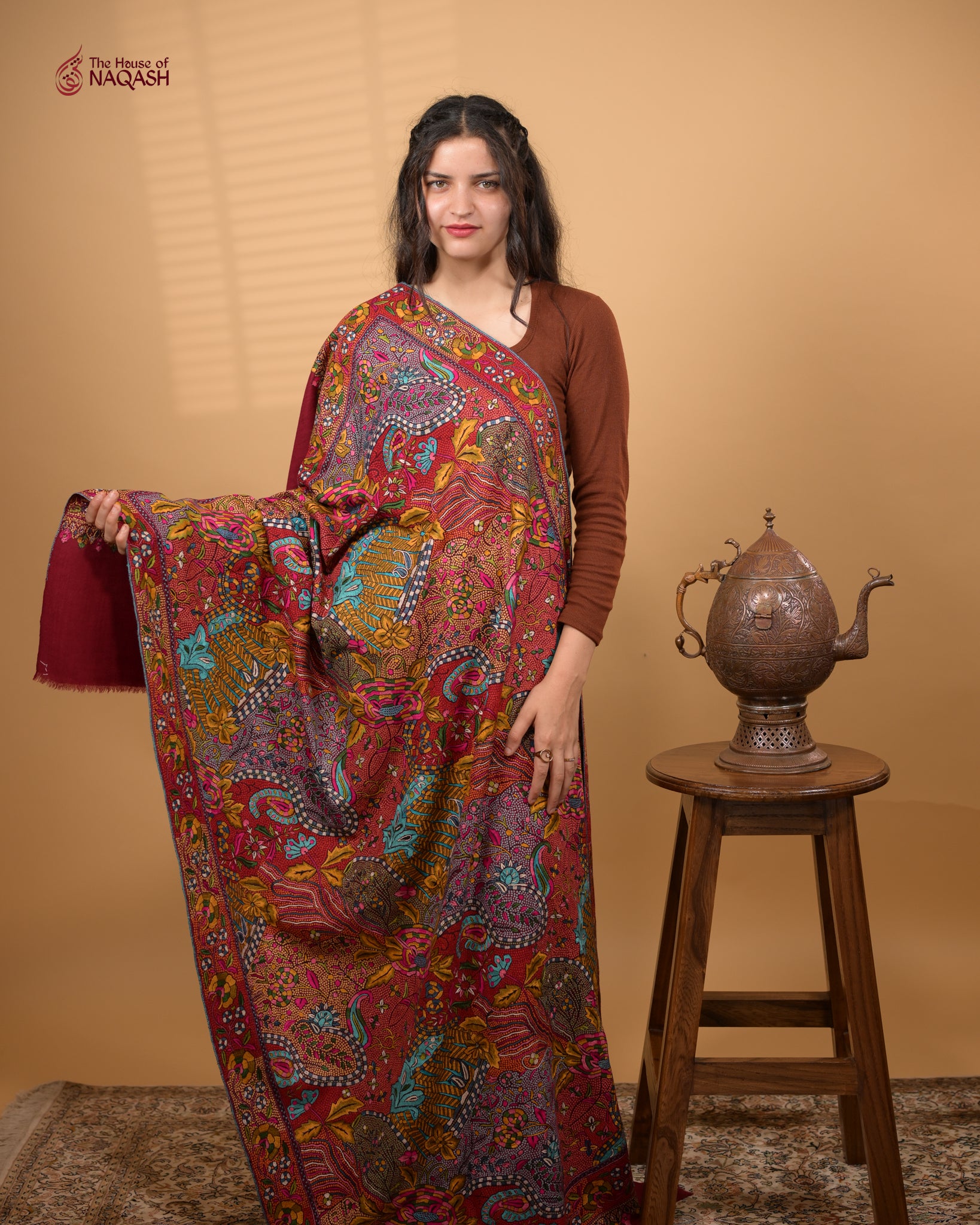
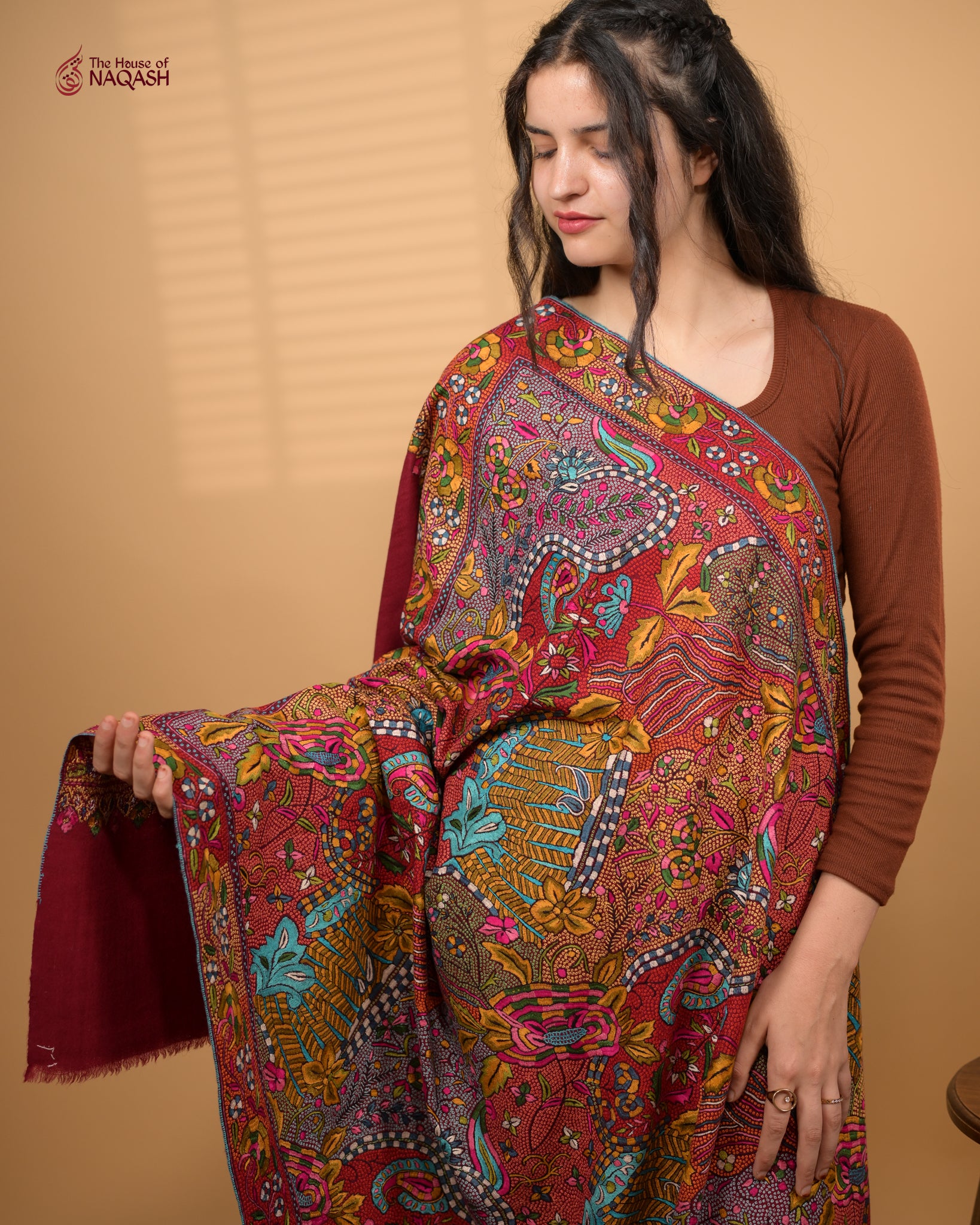
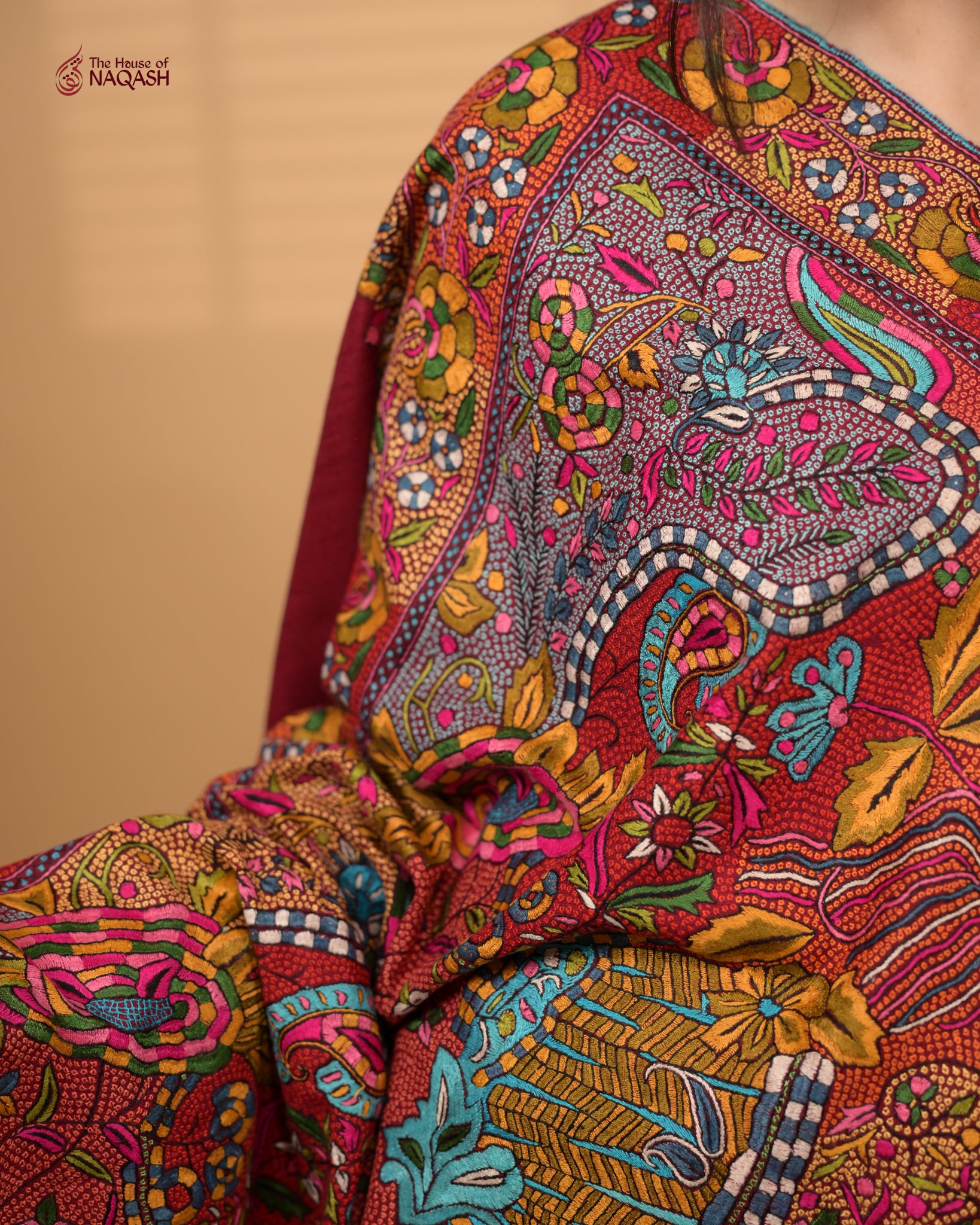
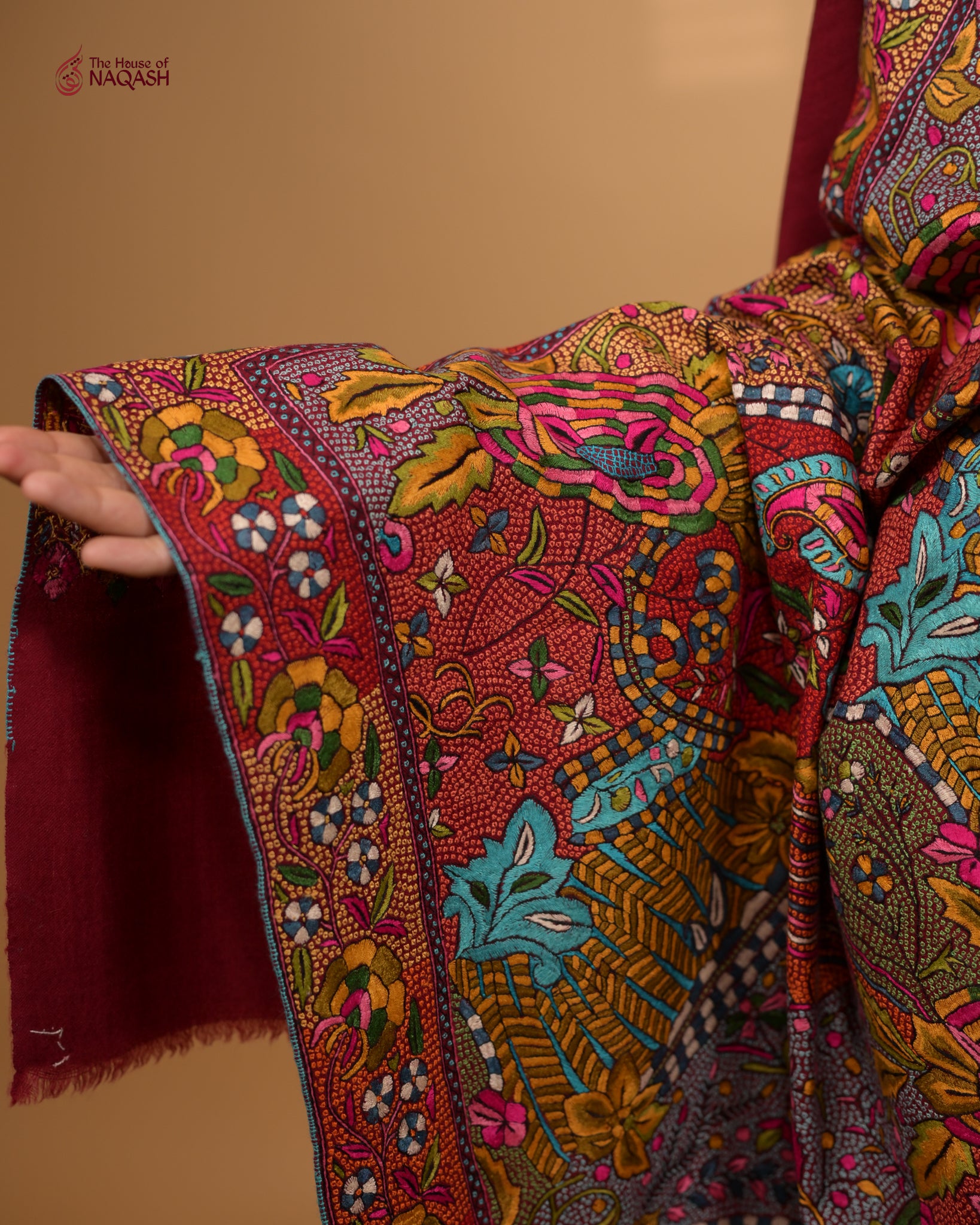
Crafted from 100% pure Ladakhi Pashmina fiber, sourced from the Changthangi goat at altitudes above 14,000 feet, this luxury Pashmina shawl offers a warmth and softness that is almost impossible to describe until you feel it against your skin. Featherlight, silky, and extraordinarily warm it is everything a pure Kashmiri Pashmina shawl is celebrated for.Its deep wine-red base is covered entirely in a traditional Jamawar (Jama) pattern, hand-embroidered using the ancient Sozni embroidery technique. A needle-only craft practised by master artisans in the Kashmir Valley for centuries. The Sozni embroidery unfolds in mustard gold, teal blue, and blush pink, each colour placed stitch by stitch, by hand, with no shortcuts and no machines.
This is a GI-certified, authentic Pashmina shawl, shipped with a Certificate of Authenticity.
Specifications
- Craft Time: 1 Year of meticulous Handwoven and Hand Embroidered
- Embroidery Technique: Traditional Sozni Hand Embroidery
- Material: 100% Pure Pashmina
- Base Colour: Wine Red
- Dimensions: 80in x 40in (2m x 1m)
- Certified Authenticity: GI Certified Authentic Pashmina
- Care Instructions: Dry clean only for preservation
- Shipped within 48 Hours: Ready to dispatch
| NOTE: Actual colour may vary slightly from images due to monitor calibration and lighting conditions. |
Heritage Pashmina | Handmade in Srinagar, Kashmir, India
- Regular price
-
Rs. 189,700.00 - Regular price
-
- Sale price
-
Rs. 189,700.00
Tax Included
-
Hurry, only 1 item left in stock!
Couldn't load pickup availability

FAQs
What is the process involved in making a Pashmina Shawl?
The creation of a Pashmina shawl is a meticulous and time-consuming process that begins in the high-altitude Himalayan region of Changthang, Ladakh, where the Pashmina goat thrives at elevations of 14,750 feet. After collecting the pashm from the underbelly and neck of the goat, the journey of the shawl encompasses several detailed steps: dehairing, cleaning, teasing, combing, strengthening the fibers, spinning, warp preparation, weaving, cleaning, mending, dyeing, Naqashi designing, embroidery, and applying the finishing touches. This elaborate process, from the collection of pashm to the final embellishments, showcases the dedication and skill of the artisans involved in crafting a Pashmina Shawl.
Time involved in making a Pashmina Shawl?
The duration of the embroidery process for a Pashmina Shawl varies significantly, primarily influenced by the intricacy of the design. Simple patterns may only require three months to complete, while more complex designs demand a considerably longer time, potentially extending up to two years. This variance in time reflects the meticulous attention to detail and craftsmanship required to bring elaborate designs to life on the delicate fabric of a Pashmina Shawl.
What defines the luxurious texture of Pashmina?
Pashmina's luxury comes from the fine hair of Himalayan goats, spun into yarns that are soft, warm, and lightweight.
Why are Cashmere products considered a staple in high-end fashion?
Their exclusivity, softness, and the intricate process of production make them a high-end fashion staple.
What guidelines should one follow to extend the life of Pashmina items?
Gentle hand washing, drying flat, and moth-proof storage are key to preserving these fabrics.
How does one distinguish genuine Cashmere and Pashmina from imitations?
Authenticity is verified through texture, warmth, weave, and seller reputation and above all the certification by the Government under the stamp of GI tag
Can environmental sustainability be maintained in the production of Cashmere and Pashmina?
Yes, through responsible herding, ethical treatment of animals, and fair trade practices.
What makes Pashmina an exceptional gift choice?I
ts rarity, craftsmanship, and luxury status make it a thoughtful and elegant gift.
How do seasonal changes affect the use of Cashmere and Pashmina garments?
Their insulation and breathability make them suitable for year-round use.
How does the GI tag certify the authenticity of authentic Pashmina?
The GI tag ensures the product is authentically produced in its traditional region, guaranteeing quality and origin.
You May Also Like
-
Navy Paladar Pattern Stole
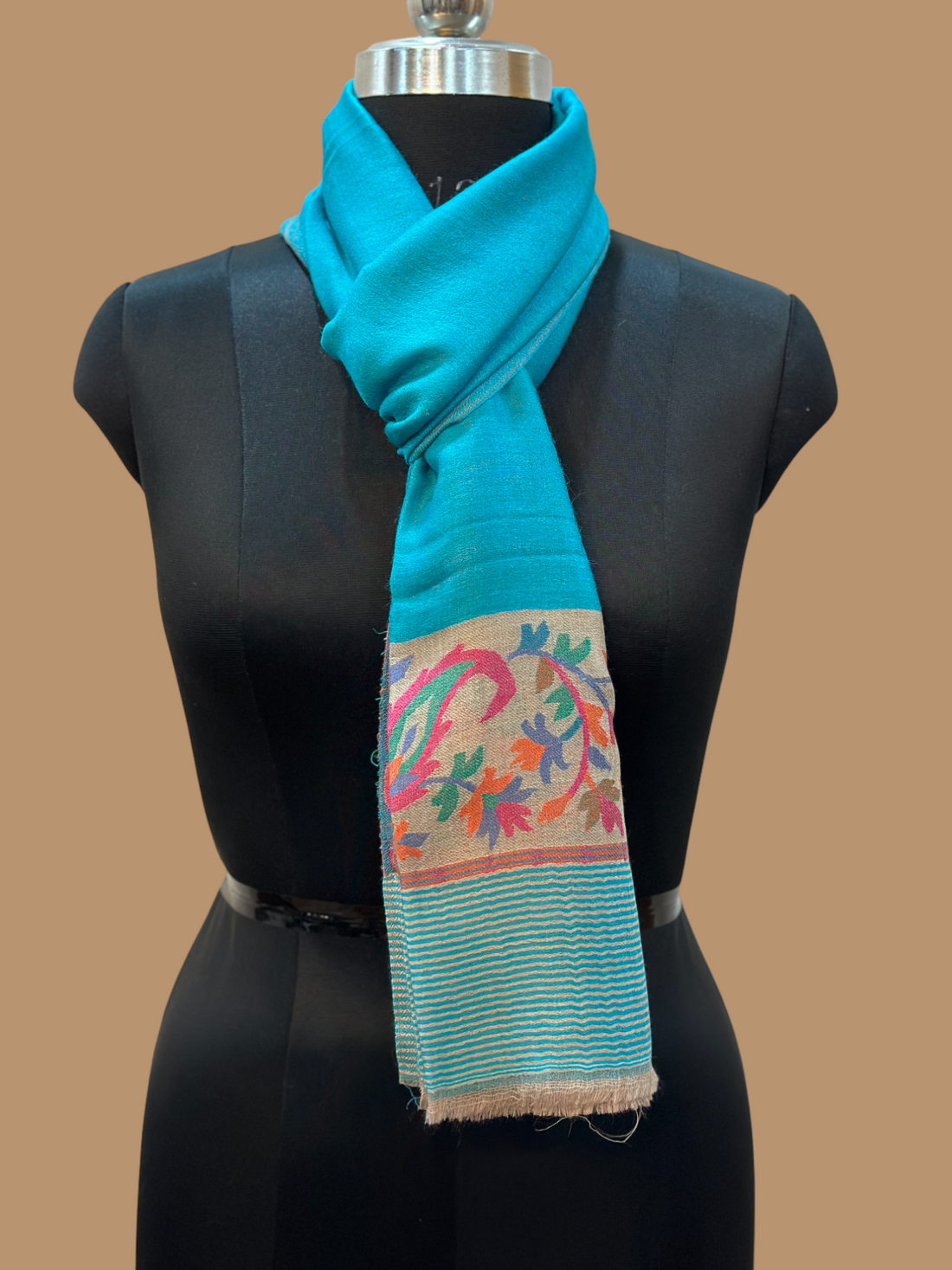 Navy Paladar Pattern Stole
- Regular price
-
Rs. 2,525.00 - Regular price
-
Rs. 2,800.00 - Sale price
-
Rs. 2,525.00
Quick view
-
Cherry Red cultural wrap
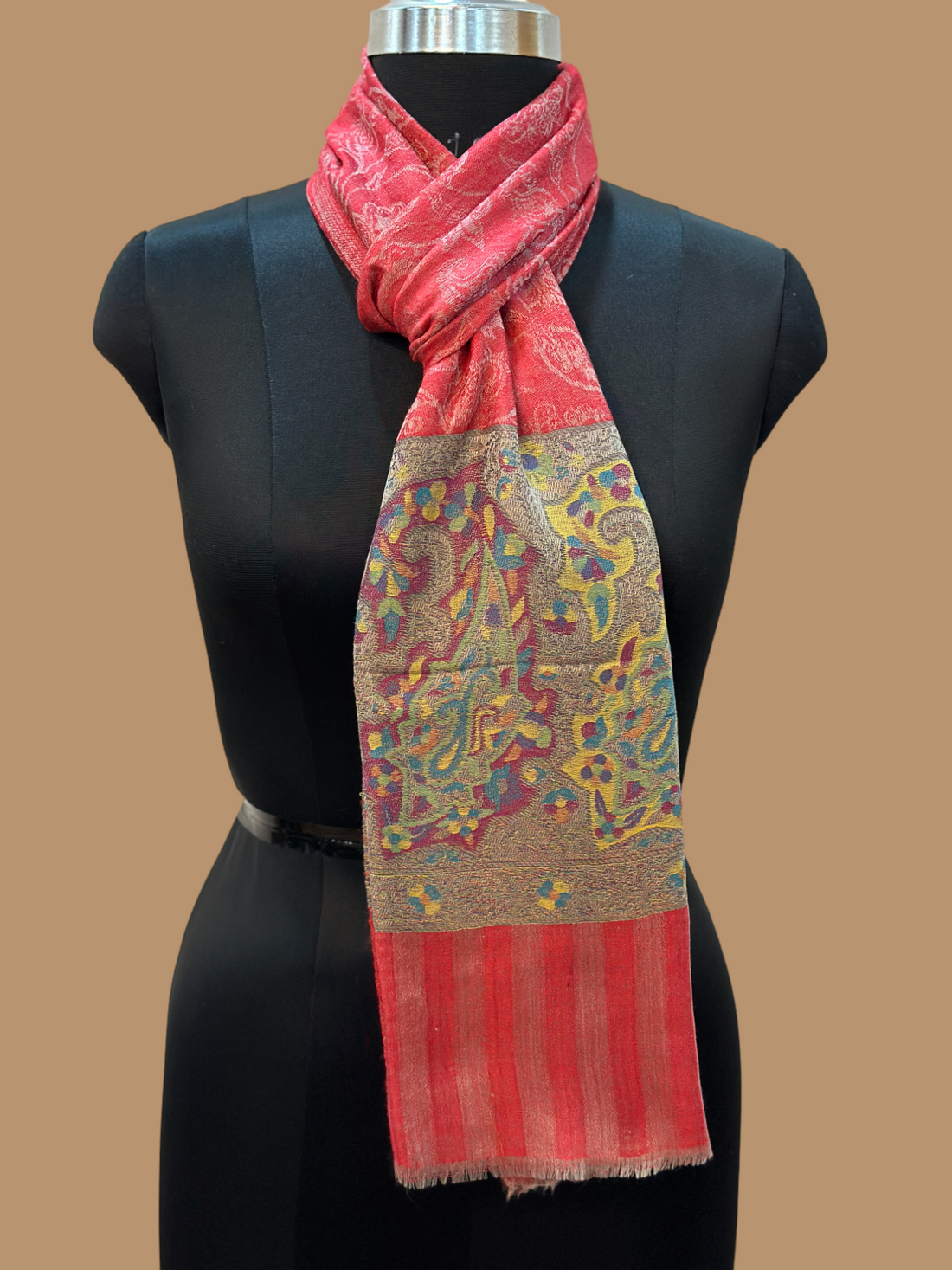 Cherry Red cultural wrap
- Regular price
-
Rs. 2,525.00 - Regular price
-
Rs. 2,800.00 - Sale price
-
Rs. 2,525.00
Quick view
-
Golden Pala Motif Stole
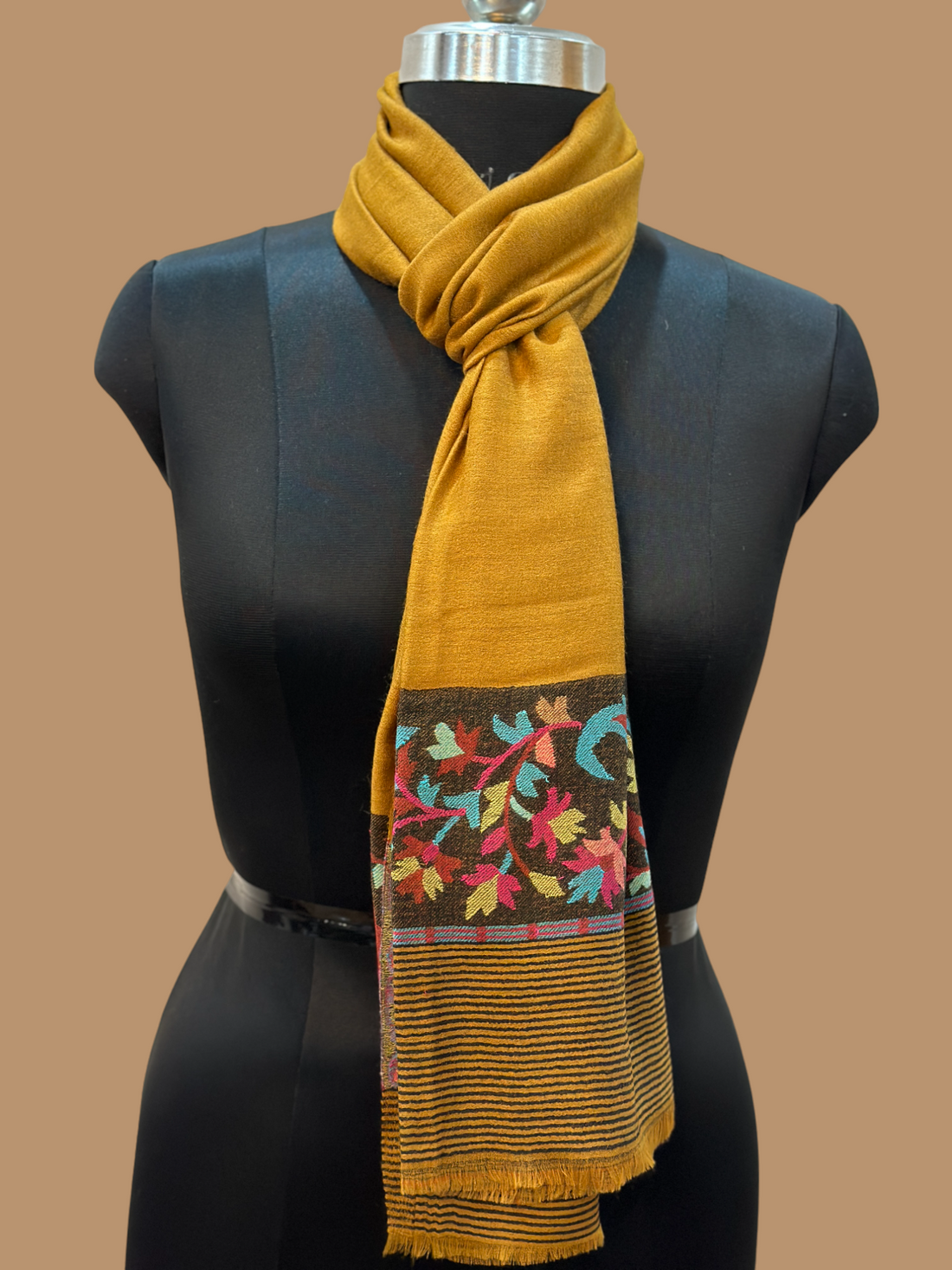 Golden Pala Motif Stole
- Regular price
-
Rs. 2,525.00 - Regular price
-
Rs. 2,800.00 - Sale price
-
Rs. 2,525.00
Quick view
-
Starlight Symphony Wrap
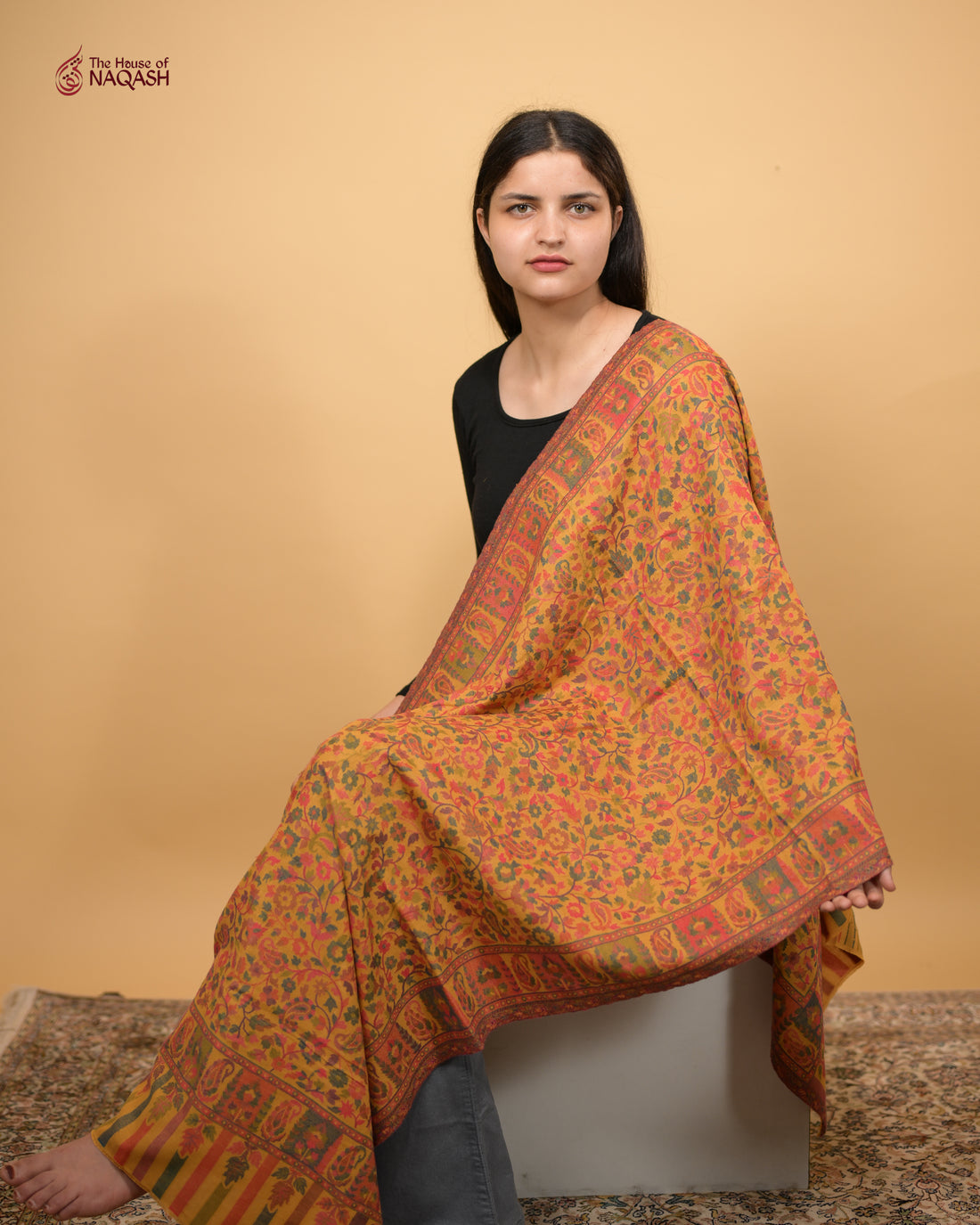 Starlight Symphony Wrap
- Regular price
-
Rs. 3,270.00 - Regular price
-
Rs. 3,630.00 - Sale price
-
Rs. 3,270.00
Quick view
